Deletion
Short Animation Film
Collaboration with Matthew J Sigel
Austin Film Festival Playwright Competition Second Rounder
Under Development
Collaboration with Matthew J Sigel
Austin Film Festival Playwright Competition Second Rounder
Under Development

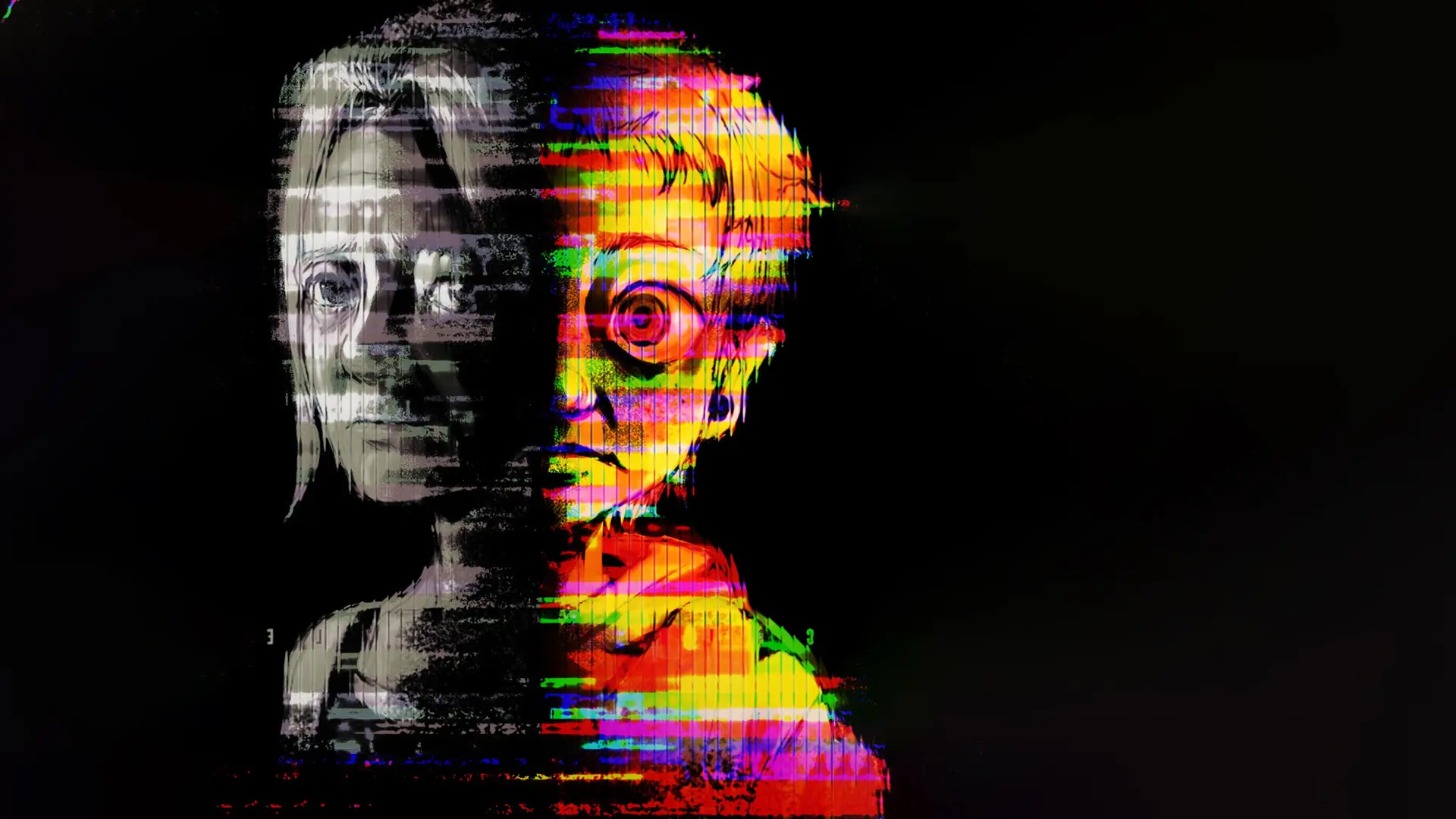
A User ID (UID) is a unique identifier assigned to anyone using a digital platform. Like billions of other connected individuals, you (the reader), and I (the author), received ours at the very beginning of our digital lives. The main character of my story bears the UID 100012031679901.
I realized that we, UIDs, regardless of gender, origin, or age, move through the physical world with our eyes fixed on screens. Our hypnotized gazes remain locked onto light-emitting diodes, while our personal data silently travels through invisible waves.
As a multidisciplinary artist using the moving image as my medium, it felt natural to tell a story about these coded, surveilled signals that demand our attention, feed our fantasies, and connect us while simultaneously isolating us. From this observation emerged the idea of a radical gesture: disconnecting, deleting oneself from this screen-saturated era in which our self-image is shaped by the puppeteers of code.
I imagine 79901 as an endearing character, both funny and unsettling, who holds up a mirror to us, inviting reflection on our own absurdities… and perhaps, change. UID 79901 is a hybrid being: half adult, half child. This duality informed the film’s entire aesthetic, oscillating between domestic hyperrealism and low-tech surrealism.
On one side, a banal, hyper-connected interior, voluntarily confined, bathed in “The Source,” a stream of saturated images reflecting our dreams while absorbing our presence. On the other, a Faraday bunker lined with conductive materials that block Wi-Fi signals and promise invisibility. These two spaces, one open yet surveilled, the other suffocating yet erased, embody the character’s inner conflict and heighten the film’s emotional stakes.
Deletion is a question of choice. A quiet but powerful act of liberation, where withdrawal is not disappearance, but self-reclamation. A promise of being fully present, here and now, in the real world, without filters, without screens.
These themes resonate deeply with me, not only as narrative material, but as a mirror of the world I inhabit. I conceived Deletion as an attempt to reconnect differently with the other UIDs around me. Because beneath our digital trance lies, perhaps, a sincere desire for connection.
My wish is to bring together a team as hybrid, sensitive, and rebellious as the character I have created, and for UID 79901 to finally find a voice, a body, and an energy capable of propelling him fully forward.


Writer, Director
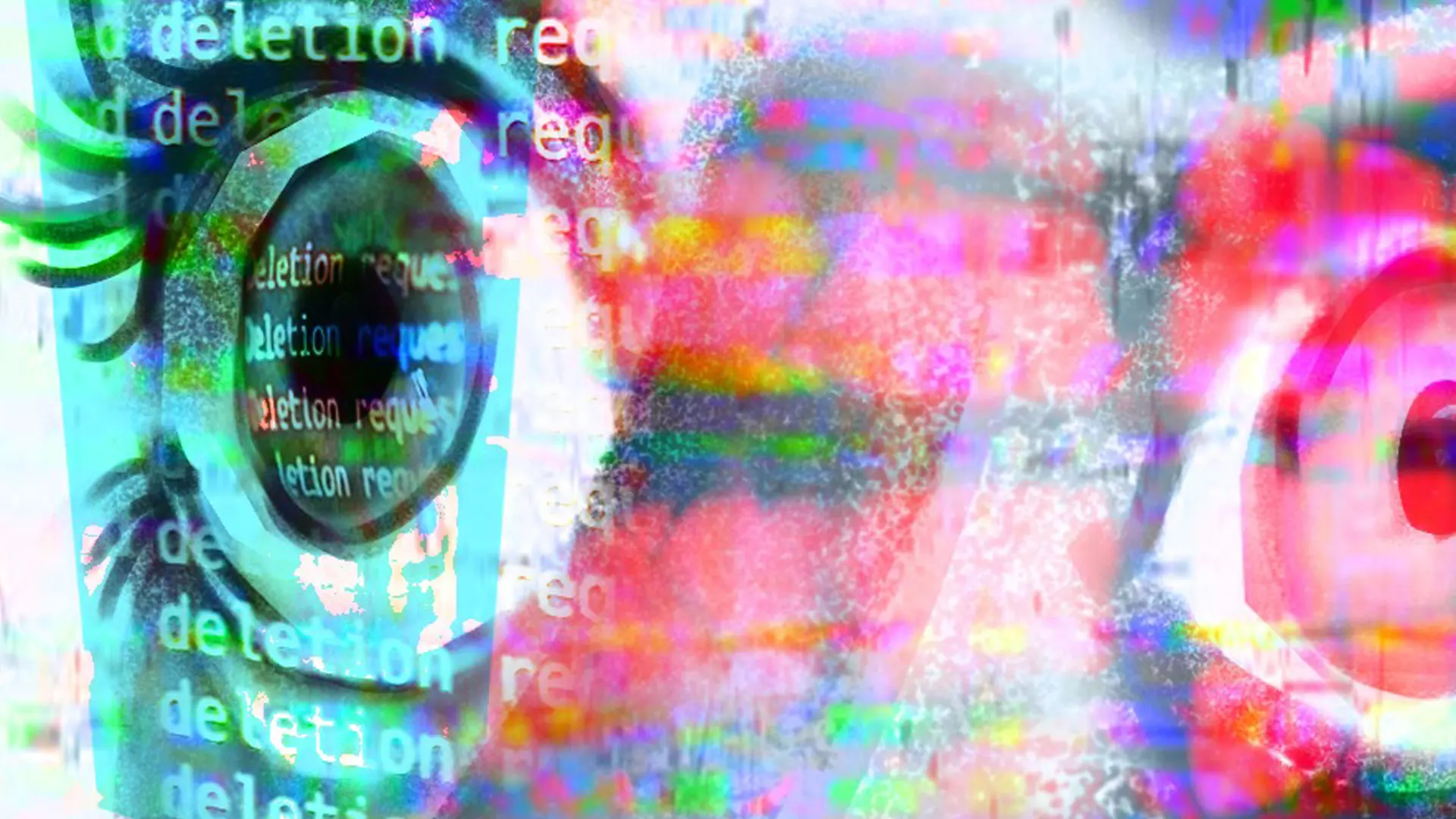
David Gil is a New York–based multidisciplinary artist working across narrative and documentary film. His work explores how technology, media systems, and power structures shape perception, intimacy, and identity, often through character-driven stories grounded in realism with restrained experimental elements.
He began his career as a Creative Director in the European luxury industry, where he developed a strong visual and narrative foundation before transitioning into the moving image. Self-taught, his approach is informed by filmmakers such as David Lynch and Pier Paolo Pasolini, as well as conceptual visual art practices, most notably Roman Opalka’s work centered on erasure and duration.
Gil’s documentary Éloge du Mouvement (2014), created with dancers affected by Huntington’s disease, was broadcast by France Télévisions. He continues his work through Deleted Films, founded under the mentorship of Matthew J. Siegel (camera department: The Matrix, Mr. & Mrs. Smith, Identity). Together, they produced the narrative shorts Candyland (2024) and Twisted (2025). Candyland screened at NewFest New York and ASVOFF Paris and was a semifinalist at the Blow-Up Arthouse Film Festival. His short script Deletion advanced to the Second Round of the 2025 Austin Film Festival Screenplay Competition.
Animation Artist
Marzieh Shojaei is an animation artist based in Japan. She studied animation and manga at Tokyo University of Technology where she focused on 2D animation and visual storytelling. Her work spans storyboarding, character-focused animation, and illustration, with experience across multiple stages of the animation pipeline.

